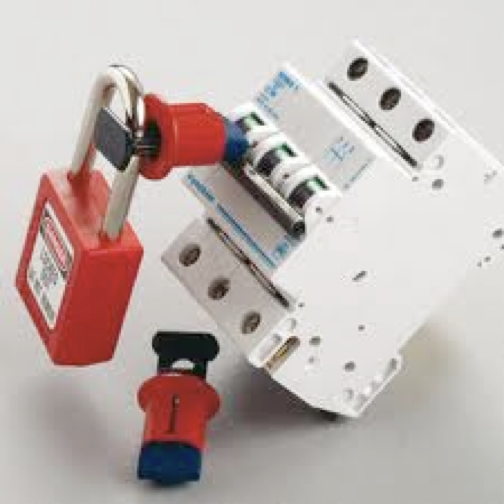
08.2 – Electrical Examples


Lets review some of the common electrical lockout devices and their applications. Take note of the comments about concerns and risks in their use and how to best deploy them.
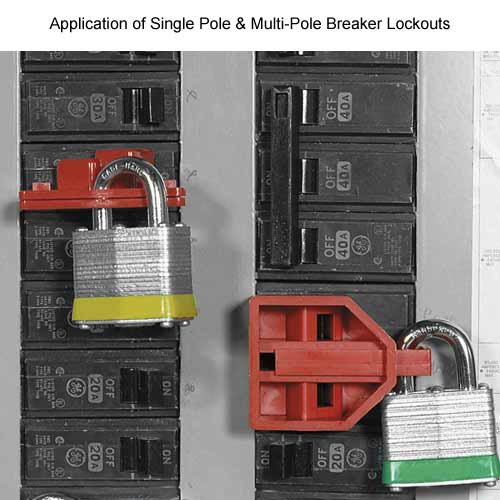
Electrical breaker disconnects are very common and come in many different shapes, sizes, and types of applications (breakers that they will fit).
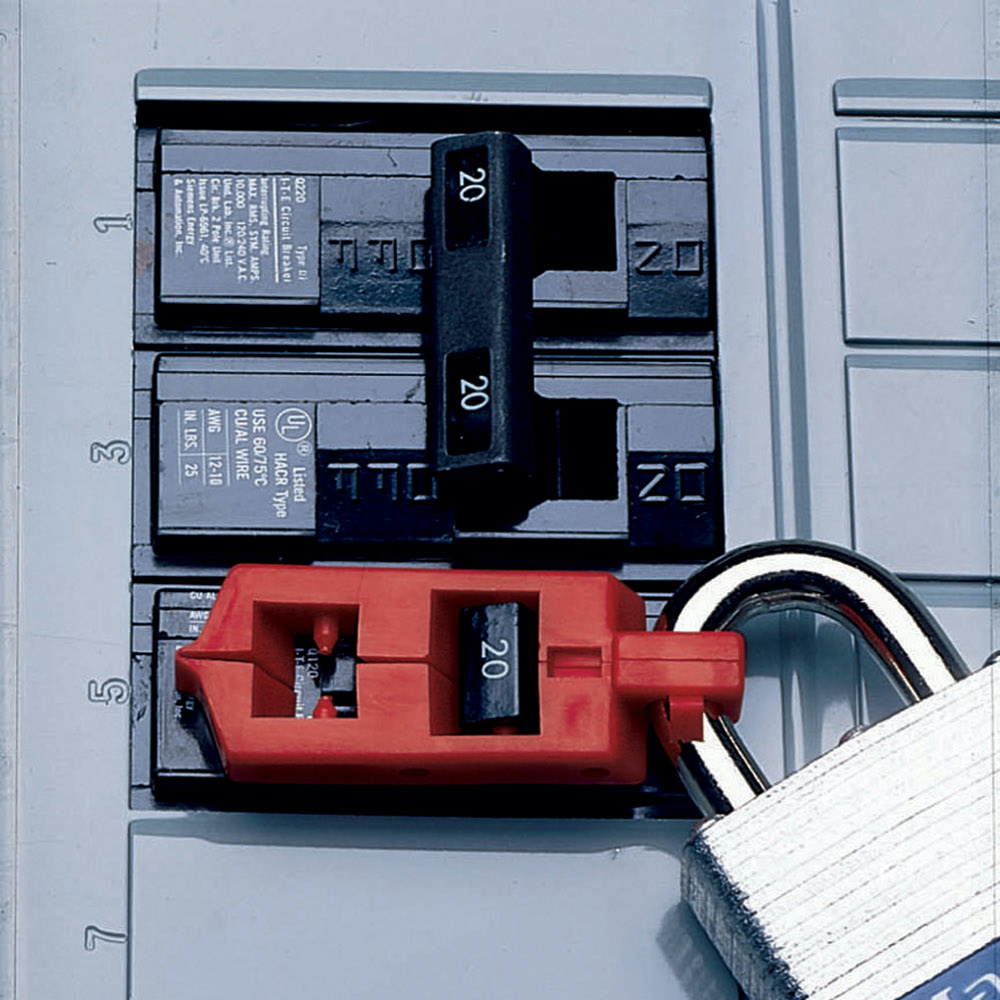

Here is a compression-style device. You must be careful not to over or under-tighten in order for it to be properly secure without damaging equipment.
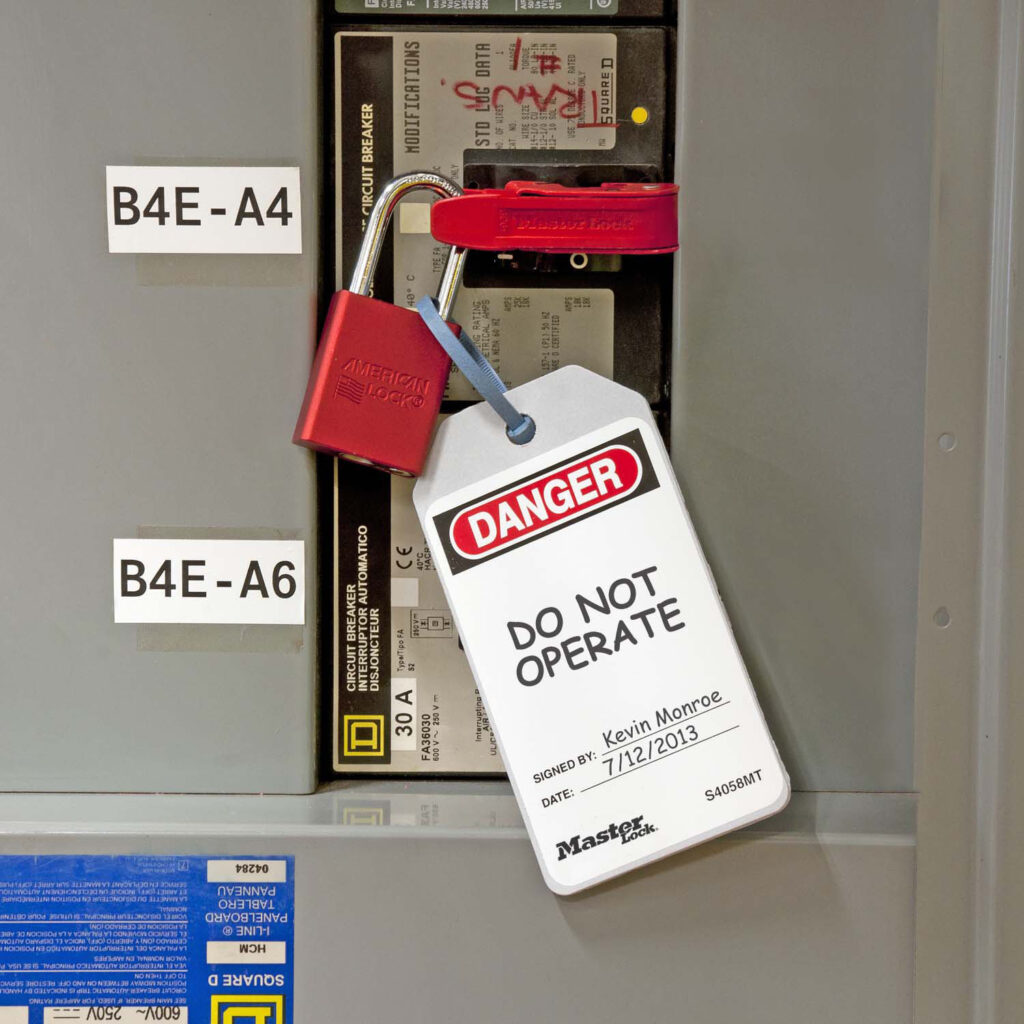
NOTE: all tags MUST have the shackle of the lock go through the tag – zip tying to the lock is not acceptable.
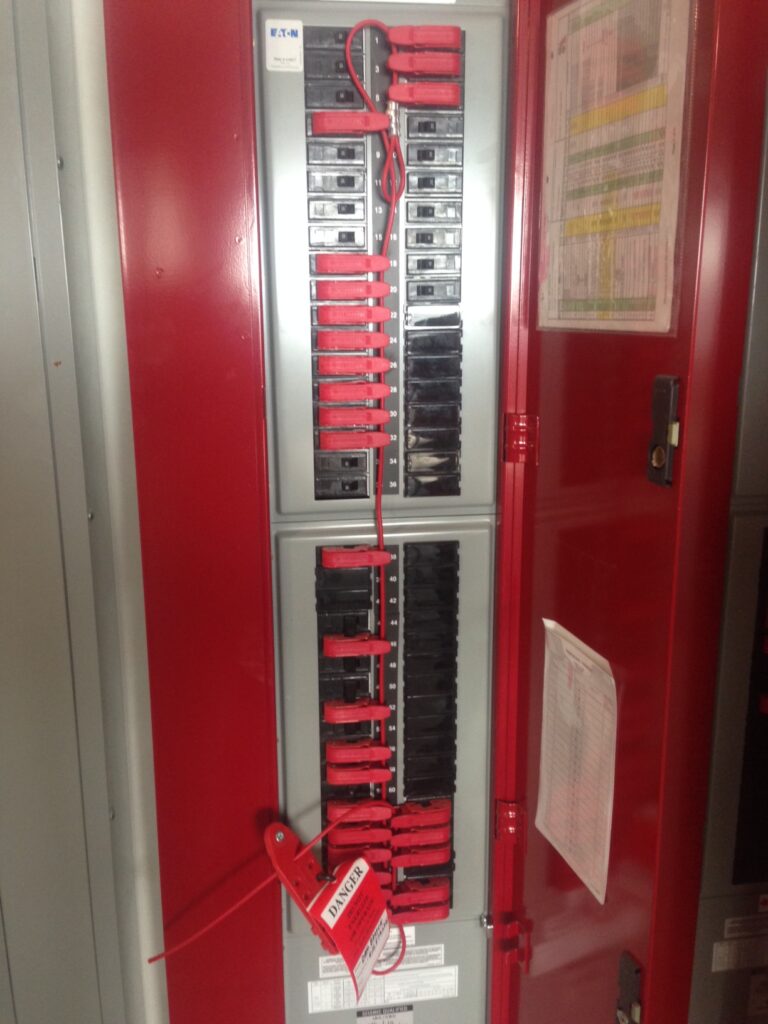
In a case where many branch circuits need to be locked out, you may need to use many individual breaker isolation devices, as well as a cable lock. It is not practical or even possible to put a lock on each one.
CAUTION: lockouts, particularly group lockouts, should be designed with the consideration of when locks will need to be removed. For example, if half of this lockout will be removed in 1 week because work is finished, but the others will remain another 2 weeks for the rest to finish, this should have been setup as two different cables and lockouts.
Some multipole units like this one, have their own custom devices meant to be used with them. You may need to purchase or have provided for you (usually by owners of equipment) specific devices.