
9 Classes
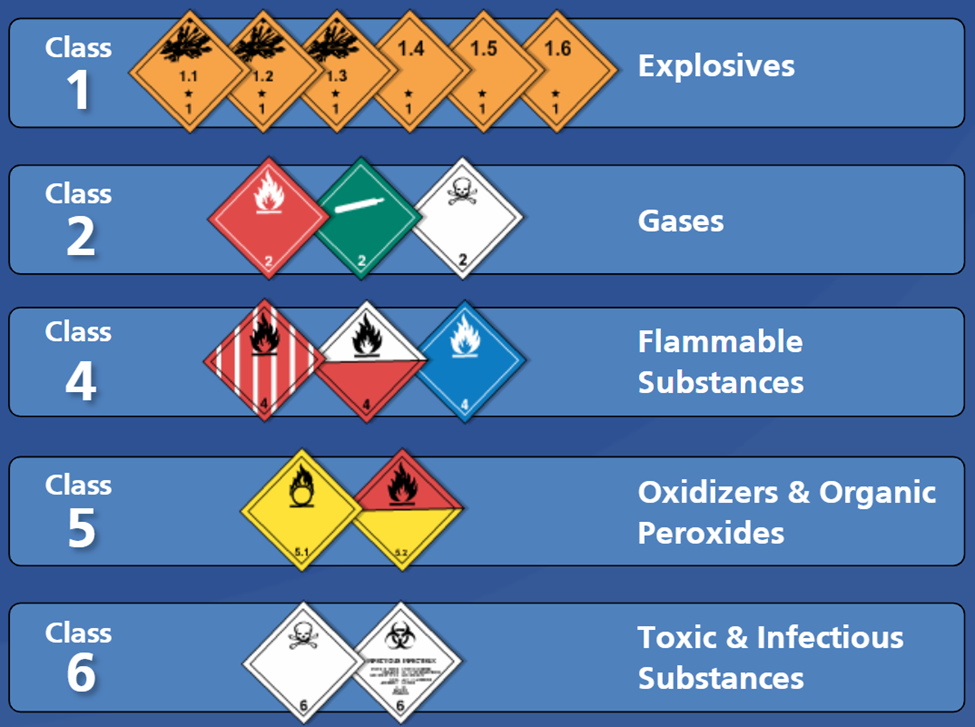
Each of the 9 classes of dangerous good represents a certain type of hazard:

Classes 1, 2, 4, 5 and 6 is separated into divisions as well
A product may belong to more than one dangerous good class. The primary class is the greatest risk and is listed first followed by the subsidiary class in brackets.
Two examples:
Methanol 3 (6.1)
Anhydrous ammonia 2.3(8)
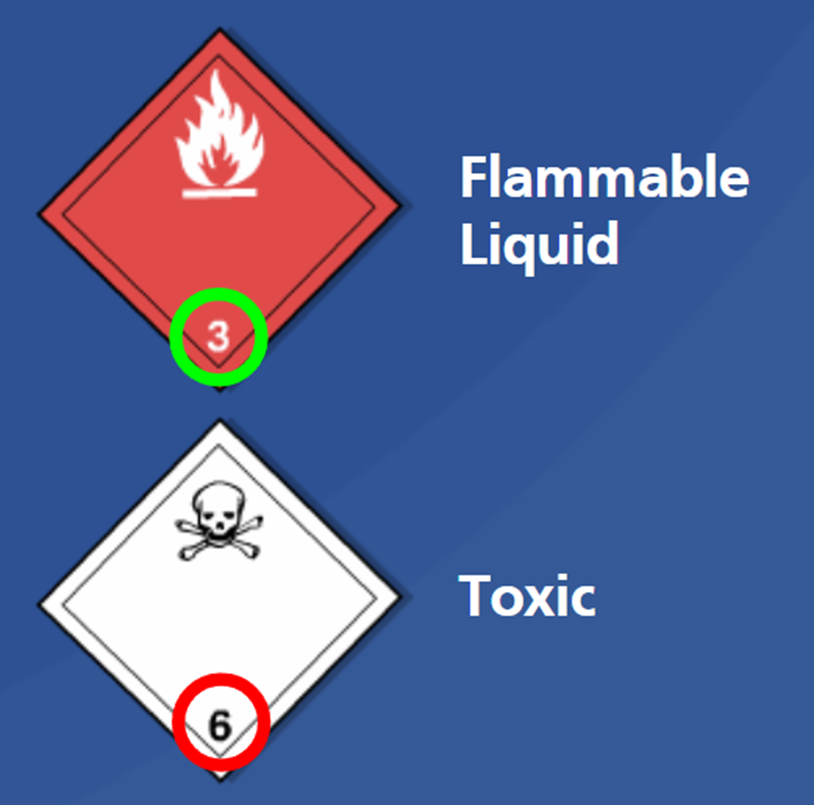
Methanol marks